Annapurna Circuit Trek
- Overview
- Cost Info
- Detailed Itinerary
- Fixed Departure
- Trip Info
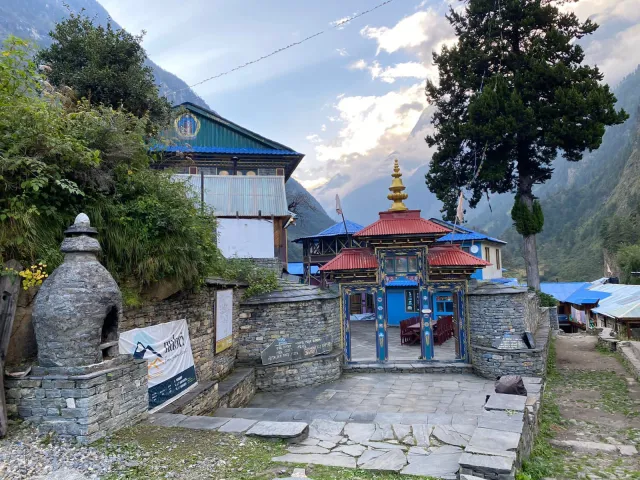
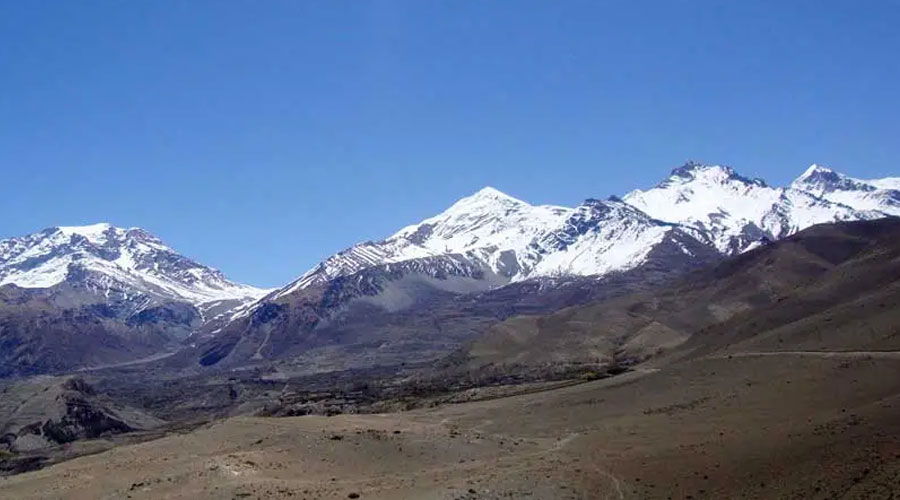
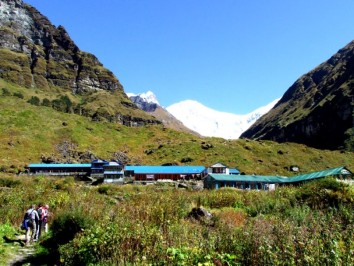
Annapurna Circuit Trek is Nepal’s most popular long trek. It follows a classic anti-clockwise route around the back of the 80 km Annapurna Range in central Nepal. It begins at a comfortable altitude of 1100m, rising daily by gentle 300-500m stages to each overnight stop, ensuring steady acclimatisation. The scenery gradually changes from lush forests and terraced farmlands to more open country as the high peaks begin to appear and the effects of the rain shadow take effect. Lowland Hindu communities gradually give way to Buddhist communities of Tibetan origin and the architecture changes to match the harsher conditions. Residents of the numerous villages along the route will welcome you and offer clean accommodation and a variety of local and “foreign” dishes.
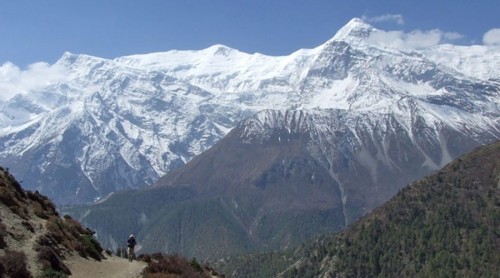
Highlights of the Annapurna circuit trekking include the high trail from Upper Pisang through Ghyaru and Ngawal to Braga (with its ancient Gompa) with magnificent views of Annapurna II and IV. Manang (3540m) is the largest village and caters well for trekkers while offering perfect views of Gangapurna and Annapurna III. The high pass over the Thorung La (5416m) should be tackled slowly. Its summit offers superb views in all directions, before descending 1700m to the important Buddhist and Hindu pilgrimage site of Muktinath. Kagbeni is an ancient stone village on the Kali Gandaki River and is the gateway to Upper Mustang.
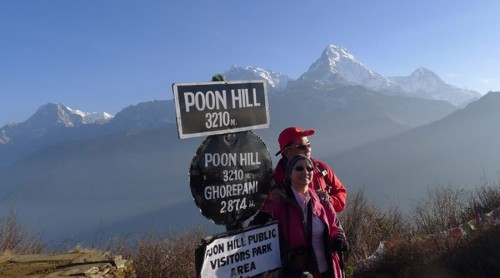
Jomsom has an airport with flights to Pokhara for those with limited time. A bus from Jomsom to Tatopani avoids a dusty walk along the recently completed road. From Tatopani (hot springs) the trail leaves the road and leads you through magnificent forests to Ghorepani and a sunrise trek to Poon Hill for views of the Himalayan peaks from the south. From there the trail descends through farmlands and forests towards Pokhara with its beautiful Phewa Lake, and your hotel.
Spring (March – May) and autumn (September – November) are the most popular months. December to February is cold with good views in the clean air. Good boots, warm clothing (including a down jacket) and a sleeping bag are recommended, plus a day pack with water bottles, a hat and sunscreen, cameras and a torch.
Around Annapurna Circuit trek cost includes transport to and from Kathmandu, full accommodation whilst on trek, all meals, drinking water and hot showers. Your guide will brief you each evening about the following day’s trek and variations to the itinerary will be made to suit the needs of your group.
Outline Itinerary
Day 01: Arrive Kathmandu (1 300m/4 264ft). MMT staff will meet and transfer you to your hotel.
Day 02: Kathmandu valley sightseeing and trek preparation
OR: A day at leisure for your own interests
Day 03: Kathmandu - Jagat (1 100m/3 608ft): 8-10 hrs drive
Day 04: Jagat - Dharapani (1 960m/6 430ft): 5-6 hrs
Day 05: Dharapani - Chame (2 710m/8 891ft): 5-6 hrs
Day 06: Chame - Pisang (3 300m/10 824ft): 5-6 hrs
Day 07: Pisang – Ngawal (3 660m/12 008ft): 4-5 hrs
Day 08: Ngawal – Manang (3 540m/11 615ft): 3-4 hrs.
Day 09: Manang: Acclimatisation and exploration day
Day 10: Manang - Yak Kharka (4 110m/13 484ft): 3-4 hrs
Day 11: Yak Kharka - Thorung Phedi (4 600m/15 092ft): 3-4 hrs
Day 12: Thorung Phedi - Muktinath (3 800/12 467ft): 8-10 hrs
Day 13: Muktinath - Tatopani (1 200m/3 937ft): 6-8 hrs drive
Day 14: Tatopani - Ghorepani (2 850m/9 350ft): 7-8 hrs
Day 15: Ghorepani - Poon hill (3 210m/10 528ft) - Tadapani (2 520m/8 268ft), 6-7 hrs
Day 16: Tadapani - Ghandruk (1 950m/6 398ft), 3-4 hrs
Day 17: Ghandruk - Pothana (1 910m/6 266ft), 5-6 hrs
Day 18: Pothana - Phedi - Pokhara (910m/2 986ft), 3-4 hrs walk, 45 min drive.
Day19: Pokhara - Kathmandu (1 300m /4 264ft), 5-6 hrs drive
Day 20: Final departure
Transfer to Tribhuvan International Airport for your onward flight to your next destination.
"OR"
Extend your holiday with a visit to Chitwan National Park – on an elephant, or a tour of Tibet or Bhutan.
Cost inclusive :
- All airport/Hotel transfers
- 2 star Hotel in Kathmandu for 3 nights on BB Plan
- City tour by private transport
- Welcome and farewell dinner
- Full meals (Breakfast, Lunch & Dinner) during the trek
- Hot drinks (Tea & Coffee)
- Safe Drinking water
- Tourist standard accommodation in Pokhara for 2 nights on BB plan
- All mountain accommodation
- Domestic flight (Kathmandu/ Pokhara / Kathmandu) or tourist bus on choice
- An experienced English-speaking trek leader (Govt. registered trekking guide), assistant trek leader (4 trekkers: 1 assistant guide) and Sherpa porters to carry luggage (2 trekkers: 1 porter)
- Guide & porter salary, insurance, equipment, flight, transport and lodging
- All necessary paper work and permits(Annapurna Conservation permit, TIMS )
- A comprehensive medical kit
- All government and local taxes
- Trekking equipment such as four season down jacket, sleeping bag, trekking boots, rain coat, walking stick and many more as per necessity
Cost Exclusive :
- Bottle drinks
- City monument fees
- Personal expenses
- Lunch & Dinner in Kathmandu & Pokhara
- Travel insurance & evacuation
Annapurna circuit trekking detail itinerary
Day 01: Arrive Kathmandu (1 300m/4 264 ft)
Our Mountain Mart Treks Airport Representative will meet you outside the Terminal Hall (after completing passport, immigration and visa requirements). Look for our Treks and Expeditions logo with your name on it. Transfer to your hotel: afternoon free. Evening: a welcome dinner hosted by our management team to introduce you to your guide, brief you on the trek and check on necessities.
Day 02: Kathmandu valley sightseeing and trek preparation
After breakfast, a city tour that includes five of the Kathmandu Valley’s cultural world heritage sites: the Hindu temple Pashupatinath; Bouddhanath, the world’s largest stupa; Swayambhunath, the famed “monkey temple” and visits to the historical Patan Durbar Square and Kathmandu’s Durbar Square (Freak Street) with ancient temples, unique art, architecture, and the chance to see the Kumari (living goddess).
OR: A day at leisure to follow your own interests.
Evening: pre-trip counselling and a check on trek gear, medical kit and permits.
Day 03: Kathmandu - Jagat (1 100m/3 608ft): 8-10 hrs drive
After an early breakfast, we leave at 07:00 for the 170km tourist bus drive westwards to the trekking point. The road winds over passes through the forested middle hills to link Hindu villages and farming communities, south of the Himalayan highlands. It follows and crosses several major rivers flowing from the glacial peaks to the north; including the Trisuli Khola, a popular rafting destination. At Dumre, we turn north, on a secondary road into the Marsyangdi Nadi Valley to Besi Sahar before continuing up a minor road to Syange (with a high waterfall) and on to Jagat (a former toll station on the ancient salt-trade route to Tibet).We will follow the Marsyangdi River for six days, to near its source on the North Annapurna Glacier. Overnight in Jagat.
Day 04: Jagat - Dharapani (1 960m/6 430ft): 5-6 hrs
After breakfast the trail descends, then climbs through rocky forest to the tiny Tibetan village of Chamje. Cross the suspension bridge over the Marsyangdi Nadi, then climb steadily to the delightful village of Tal (1700m), a former lakebed. The trail continues past barley, wheat and potato fields and through pine forests before re-crossing the river near Khotro, then and on to Dharapani: one of the larger Tibetan villages in the Manang valley, at the confluence of two rivers. Overnight in Dharapani.
Day 05: Dharapani - Chame (2 710m/8 891ft): 5-6 hrs
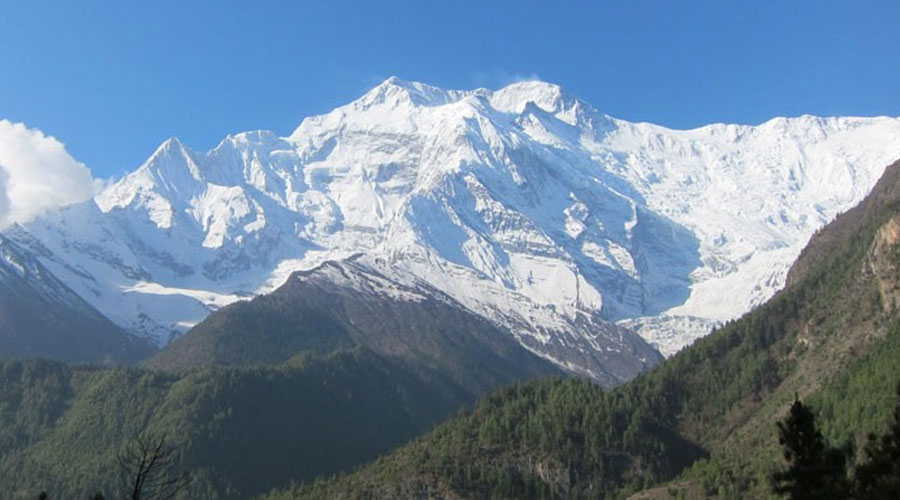
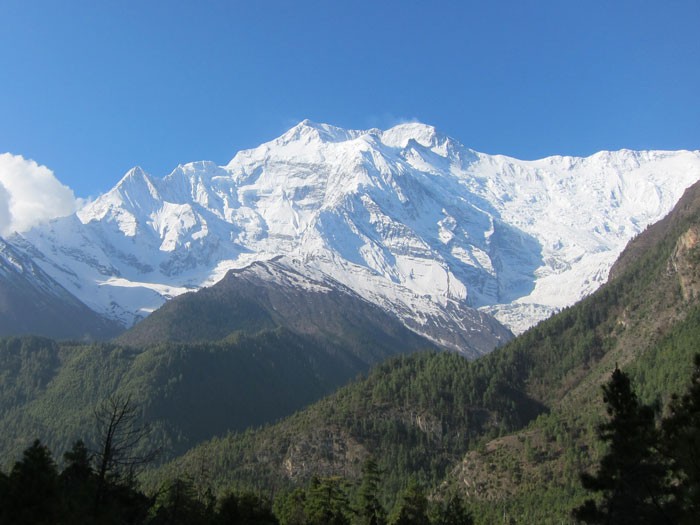
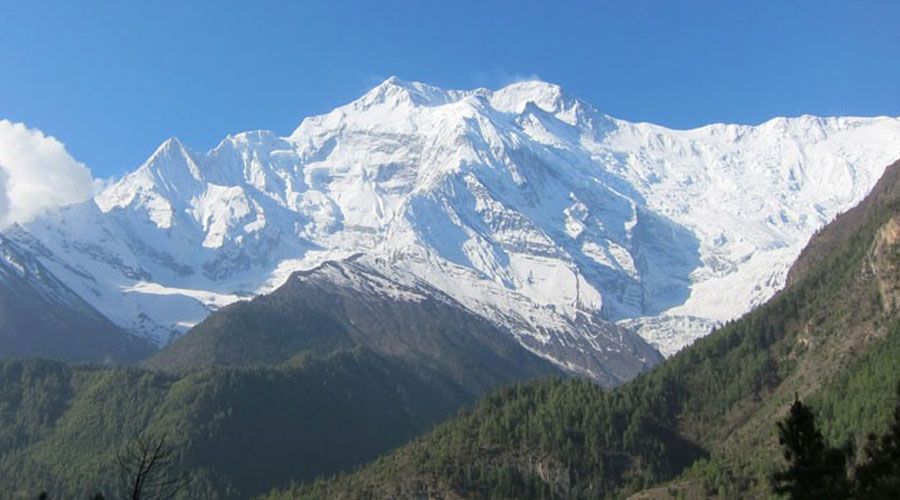
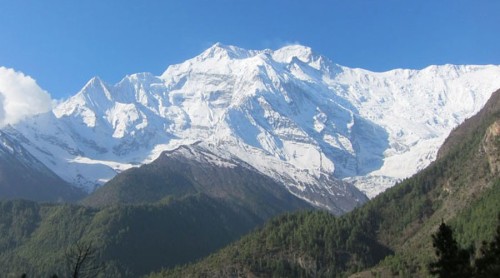
Today the valley swings westwards: we negotiate steep forested ridges and cross several landslides as we ascend the southern side of the valley. Sensational views of the Lamjung Himal, Annapurna II, and Annapurna IV (7 525m/24 688ft) will gradually rise to our left; and come into full view as we approach the large mani wall before Chame. This is the district headquarters of the Manang Valley. Overnight in Chame.
Day 06: Chame - Pisang (3 300m/10 824ft): 5-6 hrs
A steep and narrow path on the north bank, through a dense ‘Christmas tree’ and pine forest, leads to a gigantic curved, ice-carved rock face above Bhratang: which rises 1500m above the river – and takes an hour to pass. Beyond the village, and after walking along an impressive ledge hewn from a vertical cliff face, the path re-crosses to the southern side of the river and ascends, opposite the wall, into the classic U-shaped upper Manang Valley between two giant snow peaks. The views become more exciting as we approach the split-village of Pisang. Overnight in Lower Pisang.
Day 07: Pisang – Ngawal (3 660m/12 008ft): 4-5 hrs
There are two routes that we can follow today. The lower, easier route follows the river to Mungji where it meets the upper route and continues to Braga and Manang.
The more challenging upper route into the dry Nyesyang district begins from Upper Pisang and offers some of the finest scenery on the trek. Ghyaru is a fascinating cluster-village with beautifully constructed stone houses surrounded by fields of wheat, barley, buckwheat, potatoes and beans: crops that can cope with a short growing season. Then a long high traverse with great scenery, up and down the valley, to Ngawal: an interesting village with Gompa and ancient Juniper trees. Overnight in Ngawal.
Day 08: Ngawal – Manang (3 540m/11 615ft): 3-4 hrs.
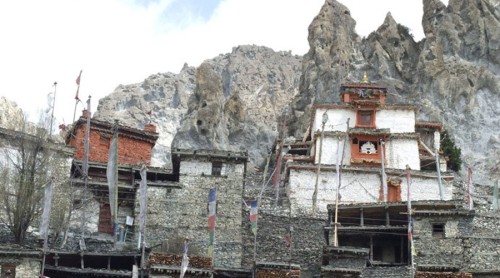
The trail now gradually descends to Mungji which has a nunnery above the village. The clustered houses of picturesque Braga are built one above the other, up a craggy slope with an impressive Gompa at the top. It is the largest, oldest and best endowed gompa in the valley. Manang is a short walk from Braga.
A morning rest in Manang and a short walk in the afternoon will further assist with acclimatisation: before the two challenging high altitude days to come. Take a walk to either Bocho Gompa or Gangapurna Lake. Visit the Himalayan Rescue Association, after 03:00pm, for information about Altitude Mountain Sickness and its symptoms. Overnight in Manang.
Day 09: Manang: Acclimatisation and exploration day
Today is a scheduled acclimatization day. It should include a short walk to higher altitudes and back: to prepare for the two challenging high altitude days to come. Take a walk to either the Bocho Gompa or the Gangapurna Lake. Visit the Himalayan Rescue Association, after 03:00pm, for information about Altitude Mountain Sickness and its symptoms. Overnight in Manang.
Day 10: Manang - Yak Kharka (4 110m/13 484ft): 3-4 hrs
From Manang the trail crosses a stream, climbs to the village of Tengi above, then continues to climb out of the Marsyangdi Valley; turning northwest up the valley of the Jarsang Khola. A slow gradual ascent is the key to avoiding altitude sickness.
The trail passes a few summer pastures and scrub juniper, as it steadily gains elevation. It climbs above Gunsang, a cluster of flat mud roofs just below the trail and continues to the hamlet of Ghyanchang where it drops to cross a tributary. It continues to rise through meadows: where horses and yaks graze. After crossing a small wooden bridge, it climbs to reach an ancient mani wall and the small pleasant village of Yak Kharka; and good views. Overnight in Yak Kharka.
Day 11: Yak Kharka - Thorung Phedi (4 600m/15 092ft): 3-4 hrs
A short day’s slow, steady climb up another 500m leads to the last outpost before the pass. The path meanders through desolate high scenery with scrub vegetation gradually giving way to rock, scree and an exposed path over a landslide before reaching the trekker-settlement of Thorung Phedi (foot of the hill). It is just a large teahouse with room for some 150 trekkers and a warm cosy dining room. It closes during the winter months.
Further up the “hill” is a small stone tea house on an exposed ridge, manned during the day by folk from the hotel, which is known as High Camp. It is wiser to sleep at Thorung Phedi than to climb to this elevation for a night and shorter summit day.
Day 12: Thorung Phedi - Muktinath (3 800/12 467ft): 8-10 hrs
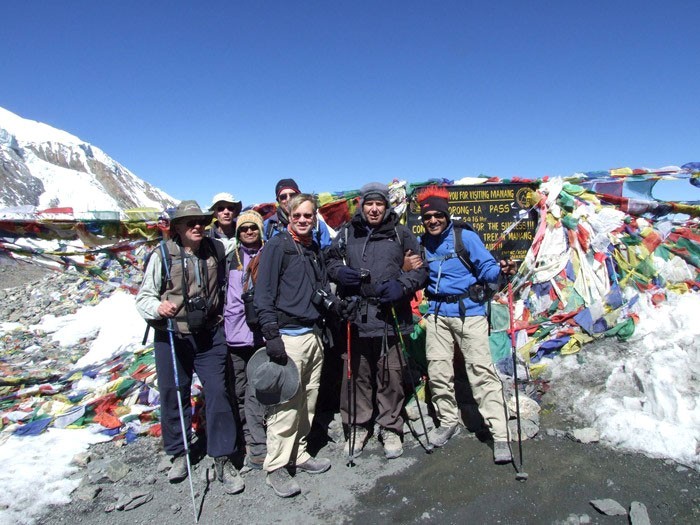
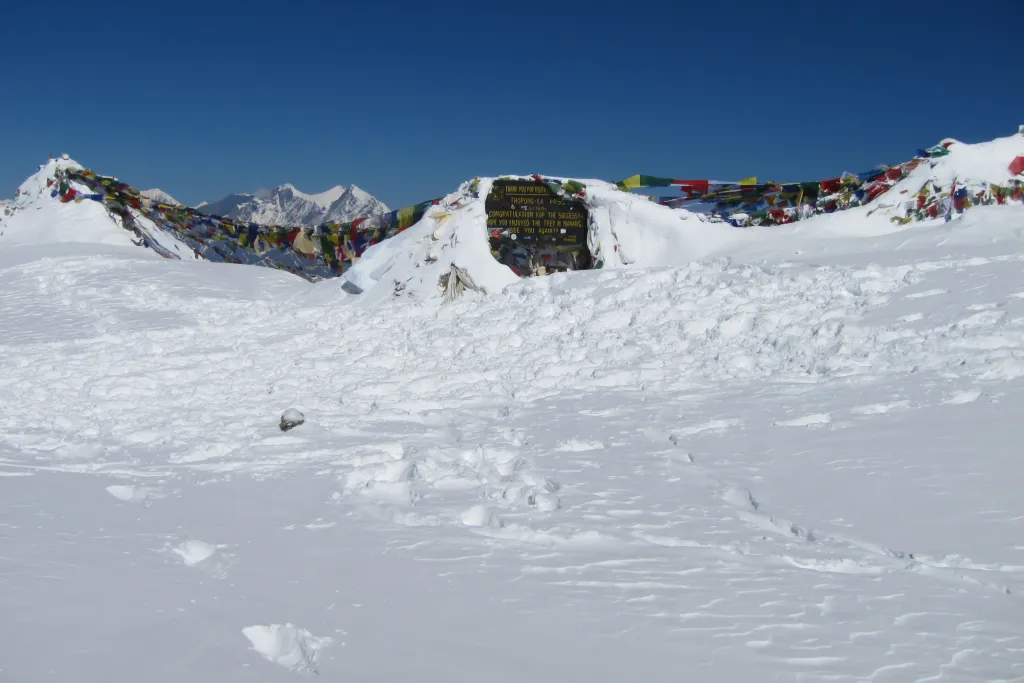
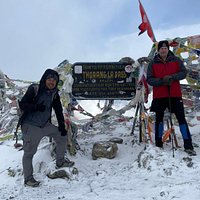
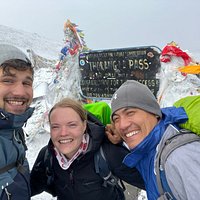
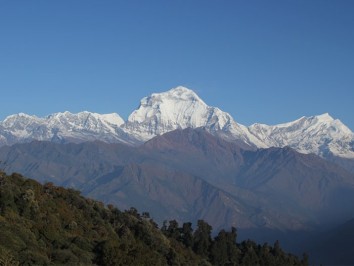
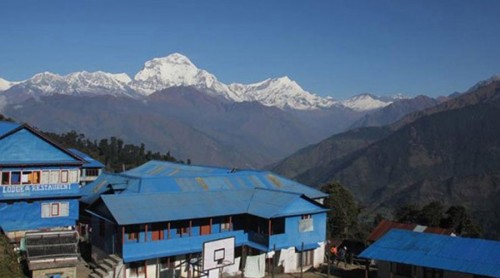
We reach the climax of our Annapurna circuit trek today: a lifetime unforgettable experience to cross this famous high pass – requiring a 1000m ascent and a 1600m descent. Thorung La (5416m) is a col between Thorung Peak (6 211m/20 378ft) and the impressive cliffs of Yakwakang (6 482m/15 434ft). From the flag bedecked summit are snowy views to the east (behind). To the west (ahead) is impressive desolate brown scenery down into the rain-parched region of the Kali Gandaki/Mustang Valley far below. On the opposite side of the valley the huge Dhaulagiri range and the mountains of Dolpo stretch to the horizon. This scene is an extension of the Tibetan highlands to the north.
From the hotel the path climbs steeply up the icy high-altitude route: but the promise of yet more tantalising views over every rise will spur you on. At one point it is necessary to climb the side of an ancient moraine, beyond which the path is rises more gently.
After a short rest and a surfeit of photos on the summit, the long drop to Muktinath must begin. At first the path drops steeply over loose gravel, which needs care. Later it becomes rockier and easier to negotiate. This long descent is rewarded by the scenery and the chance to “sleep low” again.
The important Buddhist and Hindu pilgrimage site of Muktinath will be reached in the late afternoon. Behind a very long surrounding wall and thousands of prayer flags is an oasis of springs, banyan and peepul trees with a Vishnu temple and a Buddhist shrine: testament to the mutual religious harmony in Nepal. The Tibetan name for this place, Chu Mig Tsa Gye, means ‘108 springs.’
A further 10 minute walk leads to the bustling village of Ranipauwa and our tea house for the night. The region is collectively known as Muktinath. Overnight in Muktinath.
Day 13: Muktinath - Tatopani (1 200m/3 937ft): 6-8 hrs drive
A road has been built from the lowlands as far as Muktinath, mostly along the old trekking trails. It is yet to be tarred and the daily winds that blow dust up the valley make hiking very unpleasant. So we will take a bus/jeep along the broad upper Kali Gandaki valley before dropping into the impressive gorge: the deepest in the world.
Cramped conditions are compensated for by the rugged scenery and the gradual return of vegetation. Marpha (off the road) is a beautiful stone village and important agricultural centre where large fruit orchards thrive on stock adapted to high altitude conditions. A change of vehicle is necessary for the lower section to Tatopani (hot springs) – where we leave the road and Buddhist culture, and trek again. Overnight in Tatopani
Day 14: Tatopani - Ghorepani (2 850m/9 350ft): 7-8 hrs
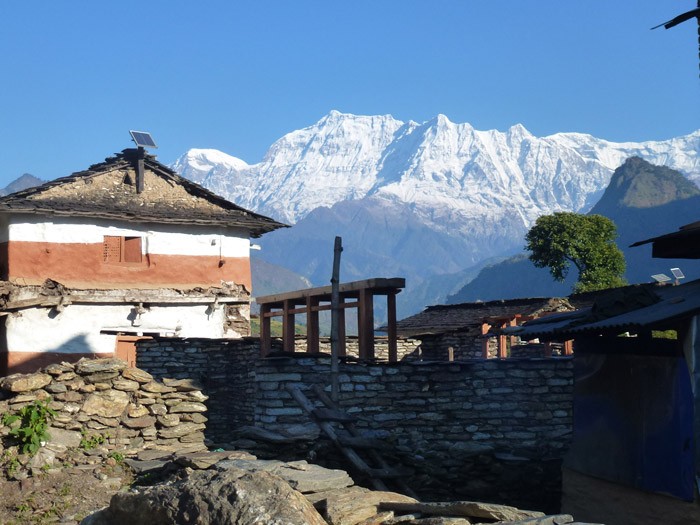
Our trail now climbs steeply up the Ghar Khola Valley which swings south east to the front of the Annapurna Massif. Much of the route is through glorious bird filled protected forests of oak, rhododendron, birch and magnolia. Villages such as Ghara, Phalate and Chitre are perched on high ridges with great views back towards Dhaulagiri or north to the Annapurnas. Ghorepani is a large tourist village below Poon Hill. Overnight in Ghorepani.
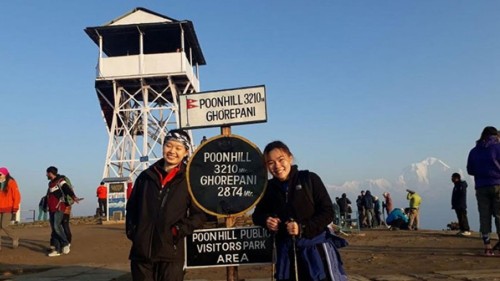
Day 15: Ghorepani - Poon hill (3 210m/10 528ft) - Tadapani (2 520m/8 268ft), 6-7 hrs
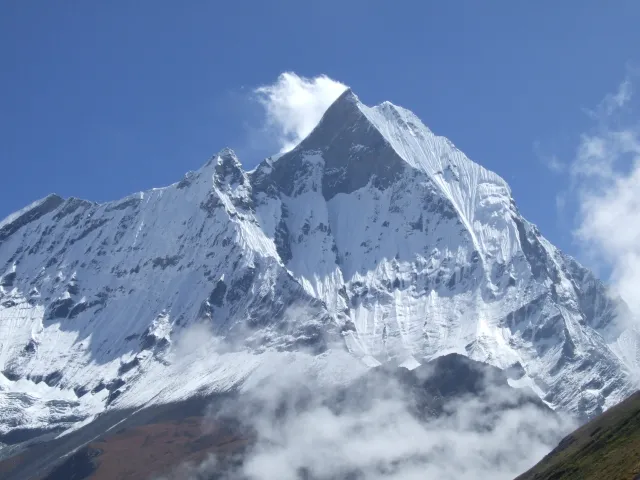
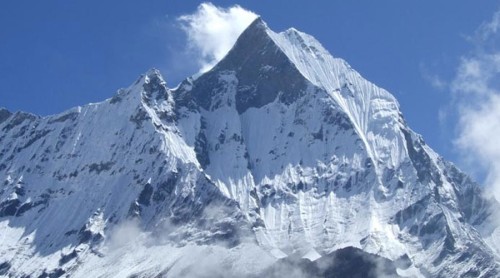
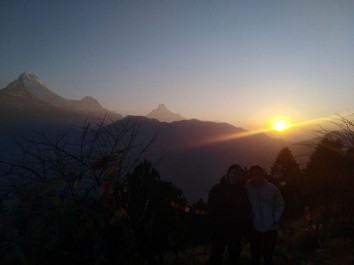
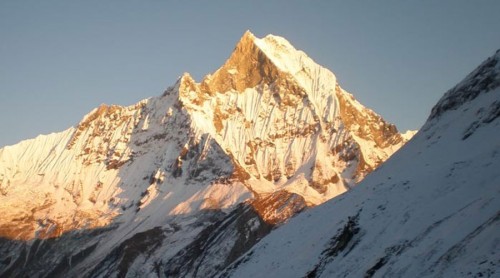
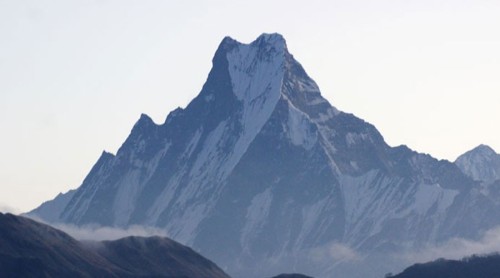
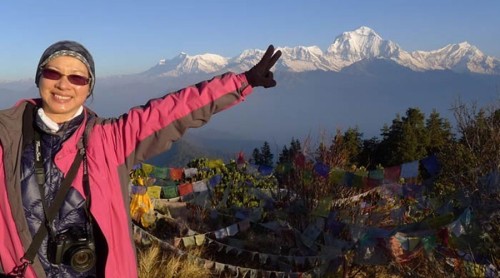
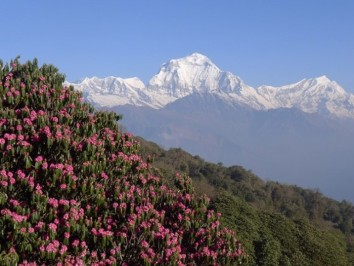
A pre dawn 45 minute walk through rhododendron forest leads up to the grassy top of Poon hill (3210m/10530ft). This brilliant viewpoint offers an unobstructed sunrise over the high Himalaya from the far western ranges of Dolpo and Dhaulagiri to the breadth of the Annapurnas in the north, dramatic Machhapuchhare (Fish Tail) and on to Manaslu in the east (with three of the world’s 14 8000m peaks). To the south, lowland forests of Sal trees stretch towards India.
After a photographic feast, return to Ghorepani for breakfast and then trek to Tadapani. The route meanders through forest and village farmland, from ridge tops to river crossings with many good viewpoints. The steep rivers carry melt water from the glaciers above. Overnight in Tadapani.
Day 16: Tadapani - Ghandruk (1 950m/6 398ft), 3-4 hrs
Today, we have short pleasant, largely downhill walk through more forest and farmland with occasional views of the mountains to Ghandruk: a densely settled, clean and modern Gurung village. It is worth exploring the surrounding area and visiting the museum: when not simply relaxing at the hotel. Overnight in Ghandruk.
Day 17: Ghandruk - Pothana (1 910m/6 266ft), 5-6 hrs
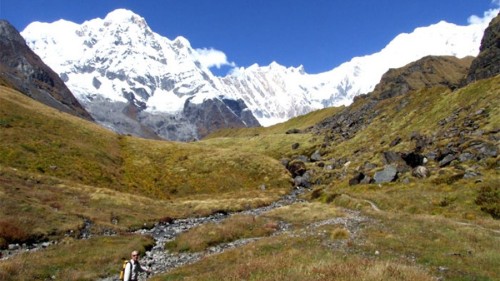
The trail descends stone staircases to the Modi Khola. This is the river that flows from the Annapurna South Glacier in the magnificent Annapurna Sanctuary (a ring of massive ice peaks that surrounds the Annapurna Base Camp, built on its moraine).
Cross the river on a suspension bridge and climb steeply to Landruk: and good views of Annapurna South, Hiunchuli and Machhapuchhare. The trail continues through scattered trees and bush to Tolka, after which it ascends steadily, for some two hours, to a ridge and Deorali. Excellent views of Pokhara and Lake Phewa are possible from here as well as the last spectacular views of Dhaulagiri, Annapurna South and the right flank of the range. The trail then descends along a red-earth path (that is treacherous when wet) to Pothana. Overnight in Pothana.
Day 18: Pothana - Phedi - Pokhara (910m/2 986ft), 3-4 hrs walk, 45 min drive.
The last day offers an easy walk down a ridge to the large agricultural village of Dhampus. It then descends through scattered villages and rice paddies to Phedi on the Pokhara – Baglung highway. A short, 22km drive will take you to Pokhara, your lakeside hotel and lunch. Afternoon free: to explore the waterfront. Overnight in Pokhara.
Day19: Pokhara - Kathmandu (1 300m /4 264ft), 5-6 hrs drive
After an early breakfast, we take the 07:30 tourist bus back to Kathmandu. Arrival time: ~14:30. Transfer to your Hotel. Afternoon free.
Day 20: Final departure
Transfer to Tribhuvan International Airport for your onward flight to your next destination.
"OR"
Extend your holiday with a visit to Chitwan National Park – on an elephant, or a tour of Tibet or Bhutan.
Departure Dates for Annapurna Circuit Trek
November, 2013 | |||||
| Departures | Avaliability | Duration | Cost / Person | Join Group | |
|---|---|---|---|---|---|
| November 27 | Available | 12 | US$ 735 | ||
Body wear :
T-shirt, long sleeve, half pant, long trouser, warm Jacket, fleece Jacket, Gore-tax windproof Jacket & trouser, warm trouser, rain Jacket, sleeping bag, down jacket
Head wear :
Sun hat, woolen hat/fleece hat, sunglass & scat
Hand wear :
Gloves
Foot wear :
Warm woolen socks, trekking boots & sandal
Accessories :
Personal toiletries, personal first aid kit, sun block, lip guard, shampoo, soap, shavers, moisturizer, passport copies, pocket knives, flash light, camera & film, towel, water bottle, music & books.
What you carry for the trek :
Please, bring the equipment listed above and pack your gear for the trek into a duffel bag or rucksacks, and small day bag for you. The larger bag with your kit will be carried by the porter to meet you each evening. You should bring a day pack to carry by yourself for water, rain jacket, hat gloves, camera money etc. The weather in mountain is changeable so you will need some warm cloths with you on your day pack.
What to do about the left over baggage :
One day before your departure for the trek you could leave the valuable things which you do not need on the trek such as passport, visa card, flight tickets, in our safety box, and the rest of the things you could store it in our store room. What is a tea house trek? Accommodation and food facilities! Tea house trek mean staying and eating in the local lodges. We stay in double room; rooms are basic but comfortable mattress, normally just a bed and pillow. Most of them have electric light and all have and all have specious dining room –lounge. Mostly in tea houses there are common bathroom. Hot shower also available on the tea- houses but the hot water depend on weather conditions and to pay to get the shower. We eat at tea- house, though food is usually potential and delicious, menu is not extensive. They offer variety of potato rice and noodle dishes, as well as soup. You could choose food from the menu what you could choose the food from the menu what you would like to have. You would be able to eat the food as much as you like but you would not able to order more than enough and left the food.
Health :
It’s very important not to get sick while you are going on the trek and you need to be careful about what you eat and drink. You need to stay healthy and avoid getting sick in order to have a successful trek.
Some tip for staying healthy:
Avoid drinking or brushing your teeth with tap water. Drink only sealed bottled or proper boiled water or use water purification tablets. During the trek avoid the temptation to test your fitness through fast walking at altitude.
Medical Kit:
Your guide will bring normal medical kits with him while on the trek. It is recommended that you also bring a small personal medical kit including pain killers, sore throat, plasters, strapping tape for blisters, etc. If you are taking regular mediation you need to bring those medicine with you and do not forget to bring extra supply if somehow one pack is lost.
The trails :
The trekking trail of Nepal varies from wide, rode-like avenues to narrow, slippery paths built out over enormous drops. In many places, a fall from the trail would be final. One most pay attention at all the time to where you are placing your fact. Be especially careful not move while looking through the view finder of your camera.
The weather :
Nepal has the wildest altitude range of any country of the earth. Each altitude will have its’ own weather problem, from typical heat to arctic cold. In the main trekking season in the spring and fall, the weather is often stable and even the high passes may be free of snow and relatively easy to traverse at times. Those trekkers who encountered an easy at altitude nasty spread the word that boots and warm clothing are not required. This is a mistake. That sudden storm can occur at any time, dumping one or two meter of snow on the passes. At that point, any one with simple running shoes will not be able to process and may even be stranded for a number of days. Frostbite is a constant risk if one walks in snow at high altitude. If you trek in the winter, you most be prepared for cold and snow. If you trek in the monsoon you might be face with slippery trails and difficult rivers crossing. You are heading into the world highest mountain range. Be prepared for changes in temperature and weather.
Altitude and preventing altitude :
Being in a hurry in the mountain of Nepal can be deadly. Acclimatization is the word used to describe the adjustments your body makes as it ascends. Ascend slowly and drinking lots of water is one of the best ways not to get high altitude. You should not plan to go to high altitude if you have know heart disease, difficulty to breathing at sea level or are pregnant. For other chronic medical conditions its better to consult your doctor. Sleeping pills, alcohol, and smoking should not be used at altitude as they tend to decrease breathing and lead to Acute Mountain Sickness. It comes that during 3-4 liters of fluids (Water, Soup, etc) per day to avoid dehydration helps in the acclimatization process.
Tipping and cash requirement
On the trekking route do not forget to bring Nepalese rupees for drinks bottled water drinks/alcohol that might purchase on the way. The sum of amount to carry on the trekking route depends on the day and area you are going to trek in. Tipping is now common in Nepal but there is no certain rules how much should be tips and it’s not the must to tip.
Photographing people :
During a trek you will have many opportunities to photograph local people and amazing society. You could use tens of films taking amazing natural scenery but talking the picture of people it’s a good idea to ask before taking. Some people do not like you to take the picture of them. So always ask before taking the pictures.
Considering Environment :
While trekking you have to consider on the environment not to destroy the environment. There are so many ways you could help not to polluted the environment of the area such as pick up papers, film wrappers, burn all your toilet paper and bury your farce, do not make camp fire.
Insurance :
All tour participants should obtain their own personal insurance which covers accidents, health, emergency evacuation and loss or damage to personal effects.
Trekking Style: Lodge
Activities: Trekking tour
Trip Route: Manang / Muktinath / Ghorepani
Trip Length: 20 Days
Meal: Breakfast/Lunch/Dinner
Difficulty : Moderate/Strenuous
Accommodation : Hotel/Guest House
Max Elevation : 5416m/Thorong La
Transportation : Bus/Car/Air
Group Size: 01 Minimum/12 Maximum
Best Month: February - May/September-December
Extend your holiday with a visit to Chitwan National Park – on an elephant, or a tour of Tibet or Bhutan.
Gokyo trekking with MMT- May 2013
My trek was with Mountain mart Trek starting from Lukla to Gokyo. It was a real experience in all of it forms. The natural sights were incredible; the guide was helpful and well prepared for the trek itself.
7 days Poon Hill ABC Trek- May 2013
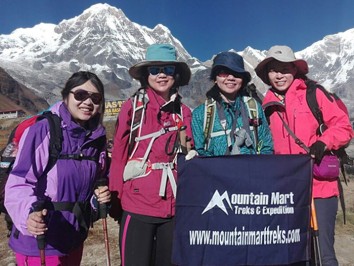
We are from Hong Kong. We three girls just finished 7 days trekking, including ABC, pooh hill and hot-spring


tripadvisor
Twitter
News & Events
Watch us on YouTube
LinkedIn
Flicker
Facebook